Mistletoe: The Celtic Peace Symbol that still inspires the world
In the heart of ancient Celtic lands, where oak forests stretched endlessly across misty valleys, the mistletoe was more than just a plant—it was a symbol of magic, life, and peace. Revered by Druids, this mysterious plant was believed to hold extraordinary healing powers. Its sacred status was amplified when it grew on oak trees, the most venerated trees in Celtic spirituality.

Elaris Windglimmer
The Sacred Mistletoe of the Druids
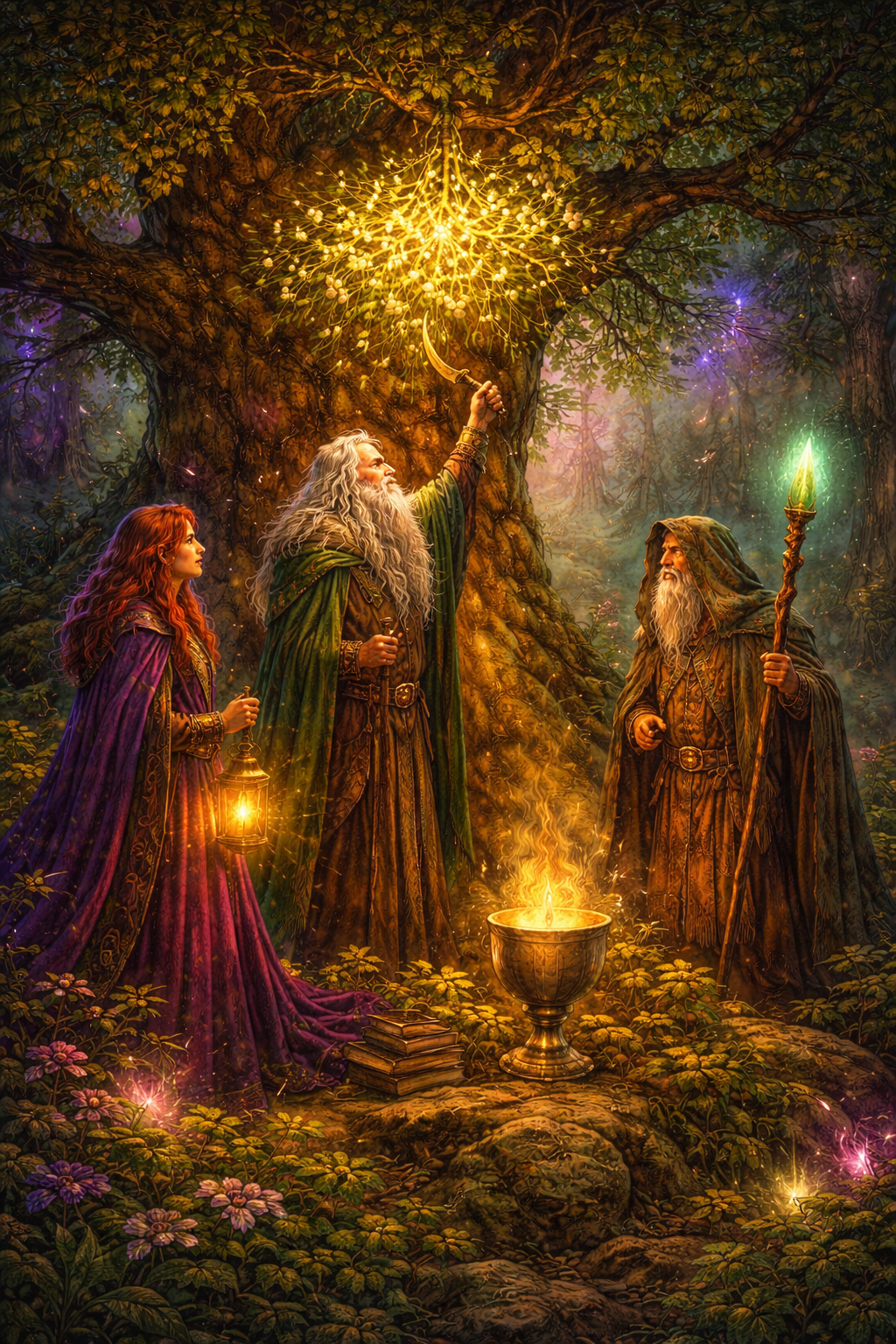
In the heart of ancient Celtic lands, where oak forests stretched endlessly across misty valleys, the mistletoe was more than just a plant—it was a symbol of magic, life, and peace. Revered by Druids, this mysterious plant was believed to hold extraordinary healing powers. Its sacred status was amplified when it grew on oak trees, the most venerated trees in Celtic spirituality.
To the Druids, mistletoe was not merely decorative. It represented a bridge between the earthly and the divine, a conduit for supernatural energy, and a tool to foster harmony even among humans who were at odds.
Mistletoe as a Peace Broker
One of the most compelling stories from Celtic lore is mistletoe’s role as a peace symbol. According to historical records, including references in Pliny the Elder’s “Natural History”, Druids would bring enemies under a sprig of mistletoe to signify truce.
The act was both ritualistic and spiritual:
- The sacred plant acted as a witness to promises
- The divine energy of the oak and mistletoe encouraged reconciliation
- It neutralized hostility, creating a neutral ground for dialogue
This tradition not only showcased the Druids’ profound connection to nature but also highlighted how plants were intertwined with social governance and conflict resolution.
Healing Powers and Magical Attributes
Beyond peacekeeping, mistletoe was believed to have magical healing properties:
- Cures for poison and illness: Druids used it in rituals to cleanse homes and bodies
- Fertility blessings: Couples who stood beneath mistletoe could receive blessings for children
- Protection: Its presence in the home warded off evil spirits and negative energies
The combination of healing, protection, and diplomacy made mistletoe one of the most revered plants in Celtic culture, embodying the idea that nature could mediate both physical and social ailments.
Why Mistletoe Matters Today
Mistletoe’s symbolism has endured through centuries, evolving but never fading. In modern culture:
- It is hung at Christmas as a symbol of love, reconciliation, and goodwill
- Its legend informs modern storytelling, fantasy literature, and folklore-inspired art
- It represents peace, hope, and unity in contemporary rituals and celebrations
By understanding mistletoe’s role in Celtic society, we can reconnect with a worldview where humans, nature, and spirit coexist in harmony.
Bringing the Legend Alive
Standing beneath mistletoe today is more than tradition—it’s a connection to ancient wisdom, a reminder that peace can be cultivated even in challenging times.
As the ancient Druids understood, sometimes the smallest sprig of life on a mighty oak holds the power to transform hearts, end disputes, and bring communities together.