
Whispers in the Mines: Rediscovering Taxco’s Mythic Past

As the moon illuminates the mountains, this legend reveals how the city’s identity was shaped not only by silver, but by the whispers of those who mined it. A forgotten myth resurfaces — inviting us to listen.

Elaris Windglimmer
Silver Mines in Taxco

The Forgotten Silver Myths of Taxco

Silver Mines in Taxco (Mexico)

The Forgotten Silver Myths of Taxco


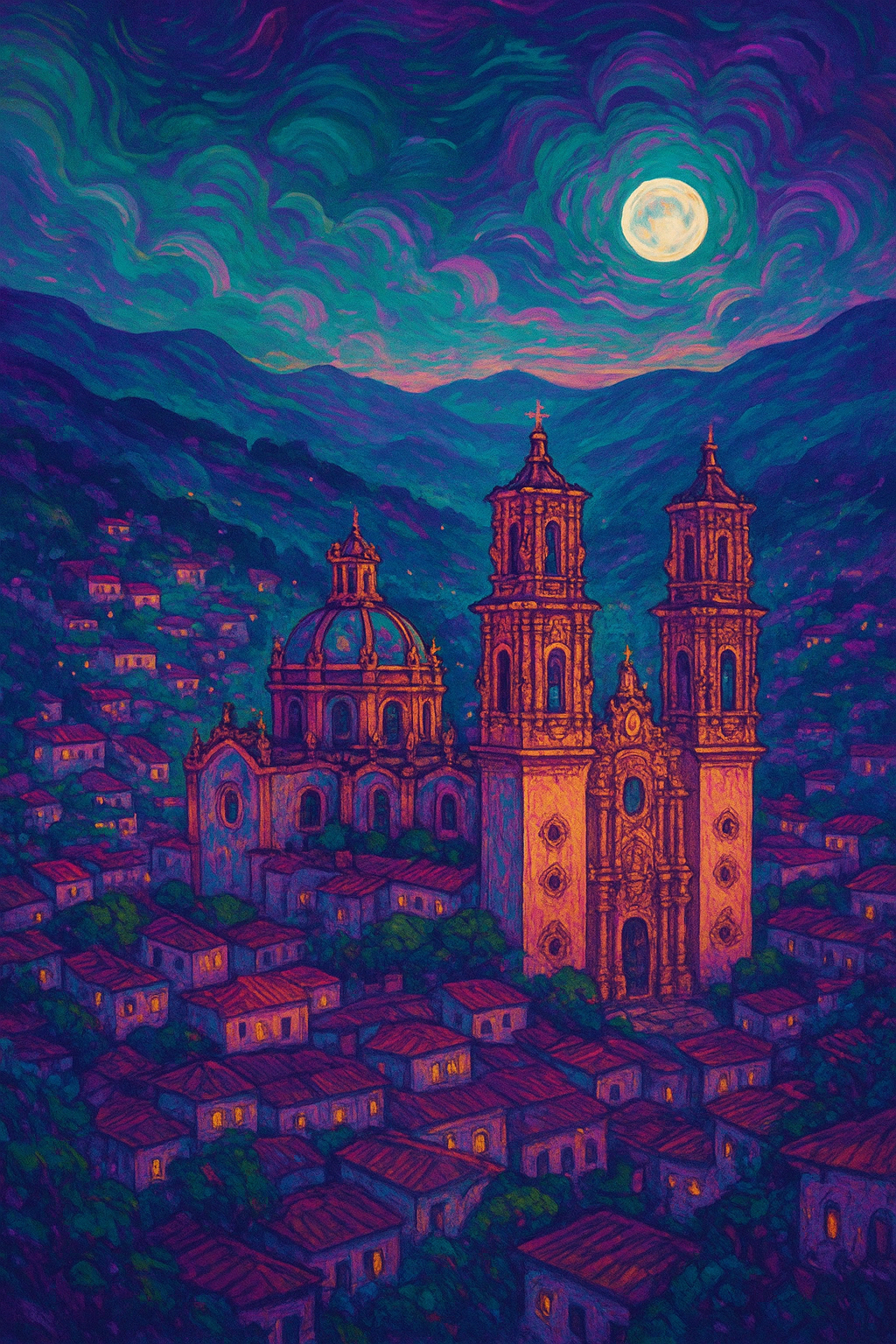
High in the mountains of Guerrero, Mexico, perched above a tangle of ravines and cobblestone alleys, the city of Taxco carries a luminous reputation: that of Mexico’s silver capital.

But beyond the glitter of jewelry and colonial façades, there’s an older story — one forged in darkness, moonlight, and the silent tears of a restless earth. This is the tale of the Volcanic Tears — a legend of lunar silver, subterranean spirits, and a vanished pact between land and people.


From Ancient Veins to Colonial Wealth

Long before Spanish conquistadors set their eyes on gold, the region around Taxco, then known by its Nahuatl name Tlachco, was home to Indigenous communities extracting metals for ritual and tribute.

When the Spaniards arrived in the early 16th century, they identified the same mountains as sources of silver and gold — and soon the area became one of the crown jewels of colonial mining.

By 1530, mines were being established, and by mid-century the hills of Taxco supplied precious metals to the New World, fueling Spain’s ambitions.

Yet, as veins depleted over centuries, as miners grew desperate, and as mines collapsed or closed, the sparkle of silver faded. Still, something remained beneath the surface: memory, sorrow, and myth.


The Birth of a Legend — “Volcanic Tears

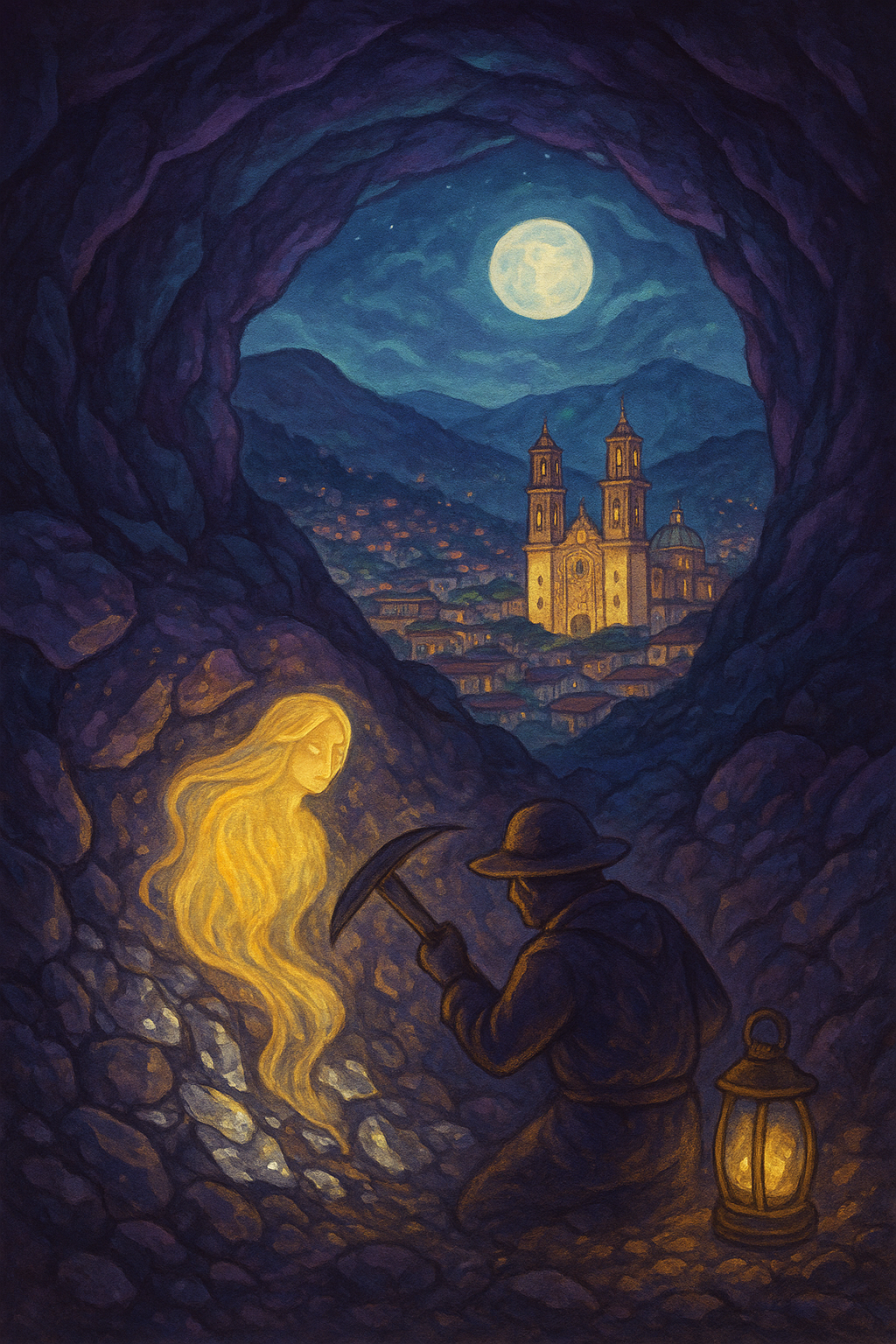
Local folklore whispers of nights when moonlight struck the old mine shafts and the rocks wept. According to the collected oral stories of village elders, miners returning at dusk claimed they saw droplets of molten silver — shimmering like tears — sliding along the mine walls, glowing under lunar light before evaporating.

Some said the tears were the mountain’s grief: grief for the land stripped of its soul, grief for lives lost in collapsed tunnels, grief for communities uprooted.

Over generations, these tales intertwined with Indigenous beliefs about earth spirits and guardians of the mines. Some versions speak of a guardian — a spectral silver-haired woman or a luminous bird — that emerges at full moon, collecting the tears and haunting the mines, warning trespassers, or granting blessings to those who show respect.

This is the legend of the Volcanic Tears — a myth of sorrow and enchantment, rooted in real mines, real history, and real memory.


Why This Myth Matters — History, Memory, Identity


A Reminder of Hidden Histories

Taxco’s fame today is largely tied to silversmithing and colonial architecture — yet much of its Indigenous past and pre-colonial mining legacy is overshadowed. Recalling the Volcanic Tears legend revives a piece of heritage lost to time, colonial conquest, and economic exploitation.

Acknowledging the Human Cost

Colonial mining in Taxco and the surrounding region was built on harsh labor, often imposed upon Indigenous populations, with dangerous conditions, disease, and displacement.

The metaphor of “tears” becomes a symbol of grief, resistance, and memory — a silent protest against erasure.

Merging Nature, Spirituality & Cultural Identity

By blending moonlight, mineral veins, and spirit-myth, the legend connects land, cosmos, and human experience. This fosters a deeper, more respectful connection to place — beyond tourism, beyond commodities.

Folklore as Living Narrative

Though not formalized in colonial records, the legend survives in whispered stories, guided-tour nighttime walks, and collective memory. In recent years, local tours in Taxco have revived interest in its “night myths,” ghosts, mines, and hidden alleys.

The legend thus becomes a bridge between past and present — a narrative tool for identity, tourism, heritage, and reflection.


The Echo of Volcanic Tears in Modern Taxco

Today, Taxco is celebrated for its silver jewelry, colonial architecture and picturesque streets.

Many visitors recall only the sparkle, the shops, the crafts. Yet after dark, the same narrow alleys and steep hills give way to eerie moonlit silence — fertile ground for stories about haunted mines, ghosts, and silver spirits.

Local guides now offer “night-myth tours,” weaving together history and legend, encouraging visitors to reflect on the dual legacy of brilliance and suffering.


What This Story Teaches Us Today

Respect for nature & land heritage — The mountain gave silver, but it also paid in lives and sorrow.
Memory over myth-washing — Recognizing stories like Volcanic Tears helps resist sanitized histories and reclaim silenced voices.
Cultural fusion as identity — Taxco’s identity today is layered: Indigenous heritage, colonial history, modern craft. Legends like this honor all layers.
Myth as mirror — The tears remind us that wealth often comes at a price; that beauty can hide tragedy; that human glory often shadows suffering.


When Silver Weeps, History Speaks

The legend of the Volcanic Tears may never be found in official archives — but its strength lies in memory, in whispered tales, in moonlit mines, in collective sorrow and wonder.

As Taxco continues to shine in silver and stone, perhaps it is time to listen: to the rock, to the night, to the myths hidden beneath the mountain’s skin. Because sometimes, when silver weeps, history speaks.

Choose another Realm for more stories

EC
Volcanic Tears — Mini Quest
Three thoughtful choices. Choose with care, then reveal the mountain’s echo.
1 — The Moonlit Drop
Miners spoke of silver droplets at dusk. Which interpretation most fits old oral tradition?
Partly true: reflectiveness and mineral sheen played a role — but the story grew deeper meanings.
Many oral versions frame the drops as messages from the land — a valid reading.
Correct: metaphor and memory are central — miners used “tears” to hold grief and history.
2 — The Moon Song
Elders sang at full moon to the shafts. What practical/ritual role did the moon serve?
Practical overlaps occur — folk knowledge often linked lunar phases to weather and safety.
Correct: moon phases oriented rituals, harvest cycles, and served as mnemonic signals.
Poetry is present, but local practice often fused rhythm and ritual into lived guidance.
3 — The Offering
Which offering aligns best with the old mine-guardian traditions recorded in regionally similar myths?
Restitution appears in many myths — returning wealth to the earth is a powerful act.
Excellent — song and wreath are recurrent in oral tradition as reconciliation gestures.
Humane and common, though ritual forms often privilege symbolic acts like songs or restitution.
Reveal the Mountain’s Echo
When you’ve chosen your answers, click the button below to reveal the mountain’s response.
Tip: For the most resonant outcome, choose answers that honor memory, ritual, and restitution.
✨ The Mountain Speaks — You Heard the Tears ✨
Your choices honored memory, lunar guidance, and song. In many versions of the Volcanic Tears legend, such clarity invites blessing — a quiet light returns to the mines.
Claim the Volcanic Tears Dossier
Receive an illustrated dossier, the full storytelling notes, and an exclusive Enchanted Chronicles print.
🌫 The Echo is Distant — Try Another Path
The mountain’s voice is subtle. Revisit the answers and listen for memory, moon, and ritual. When you’re ready, reveal again.
Request the Dossier Anyway
Prefer the dossier now? We’ll send the myth dossier and a small illustration regardless.

Join Our Community of readers – Register for our Newsletter!
Scroll to Top