The Christmas Spider: The Enchanted Legend Behind Tinsel and Holiday Magic
Discover the forgotten Christmas legend that gave birth to tinsel—and why a humble spider became a symbol of hope.

Elaris Windglimmer
A Whisper of Silver in the Winter Night
On a silent Christmas Eve, when candles flicker and snow presses softly against old wooden windows, a fragile thread of silver appears on a Christmas tree.
Not gold. Not jewels. But silk.
In Eastern Europe, this delicate shimmer is not merely decoration—it is a reminder of one of the most tender and enduring Christmas legends ever told: the legend of the Christmas Spider.
This ancient folk tale, passed down through generations, explains not only the origin of tinsel, but also the deeper values of kindness, humility, and quiet miracles that define the spirit of Christmas itself.
The Legend of the Christmas Spider
Long ago, in a small village somewhere between the forests of Ukraine, Poland, and Germany, there lived a poor widow and her children.
They had little—no ornaments, no gifts, no fine decorations. Yet, on Christmas Eve, they lovingly brought a simple fir tree into their humble home.
As the family slept, a tiny spider emerged from the shadows.
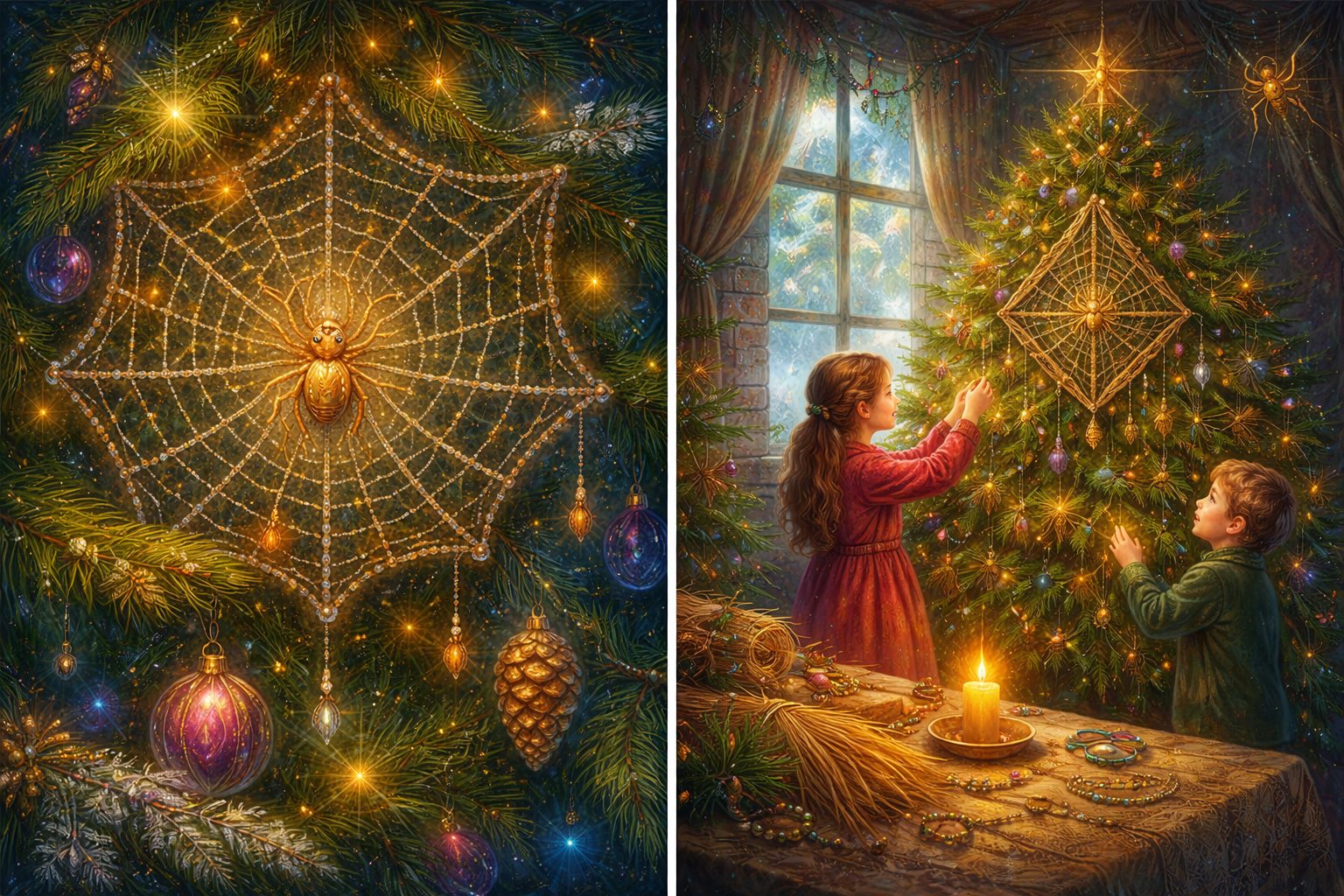
Moved by compassion, the spider climbed the bare branches and spun its finest web, wrapping the tree in delicate threads of silk. At dawn, as the first rays of Christmas light touched the web, the strands transformed into silver and gold.
The tree shimmered like a miracle.
From that day forward, it was said that spiders were blessed creatures, and their webs symbols of hope, transformation, and unexpected grace.
Historical Roots and Cultural Authenticity
The Christmas Spider legend originates in Eastern European folklore, where spider imagery remains deeply tied to Christmas traditions.
Ornamental spider webs were traditionally handcrafted from straw, thread, or silver wire and hung on Christmas trees.
Rather than fearing spiders, many households welcomed them, believing they brought:
- Prosperity
- Protection
- Good fortune in the coming year
This Eastern European Christmas tale proves that magic doesn’t need gold—only kindness.
These traditions date back centuries and were recorded in regional folklore studies and ethnographic accounts of Slavic winter rituals.
From Folklore to Tinsel: How the Tradition Endured
As Christmas traditions spread across Europe in the 18th and 19th centuries, the symbolic spider web evolved into metallic garlands.
Germany is widely credited with producing the first commercial tinsel, originally made from real silver. The shimmering strands were designed to imitate the legendary spider’s web catching candlelight on Christmas trees.
Over time:
- Silver became aluminum
- Handmade webs became mass-produced tinsel
- The story softened, but never disappeared
Today, every strand of tinsel carries a whisper of this ancient legend.
Symbolism: Why the Christmas Spider Still Matters
The Christmas Spider endures because it speaks to timeless values, such as:
Humility – Magic does not come from wealth
Transformation – Beauty can emerge from the simplest acts
Hidden Blessings – What we fear may protect us
In an age of excess, this legend reminds readers that true enchantment often arrives quietly.
Why This Legend Captivates Modern Readers
Unlike many Christmas stories, the Christmas Spider is:
- Gentle, not commercial
- Mystical, yet human
- Rooted in real traditions
It resonates deeply with audiences who crave authentic magic, emotional storytelling, and cultural depth.
A Final Whisper of Silver
So, the next time you hang tinsel on a Christmas tree, pause for a moment.
Imagine a small spider, working through the night, weaving beauty where none existed before.
That is the true magic of Christmas.